





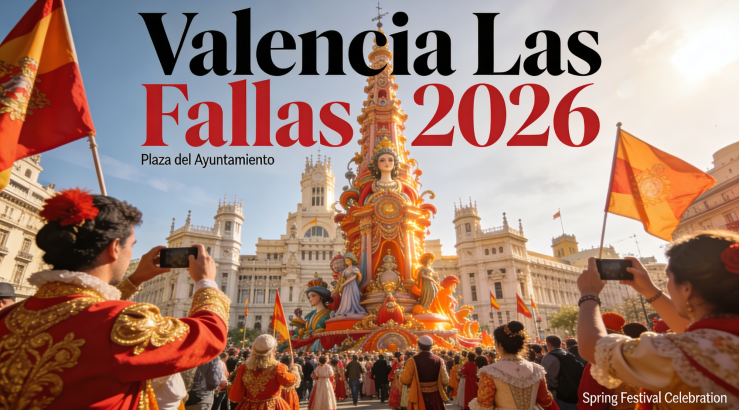
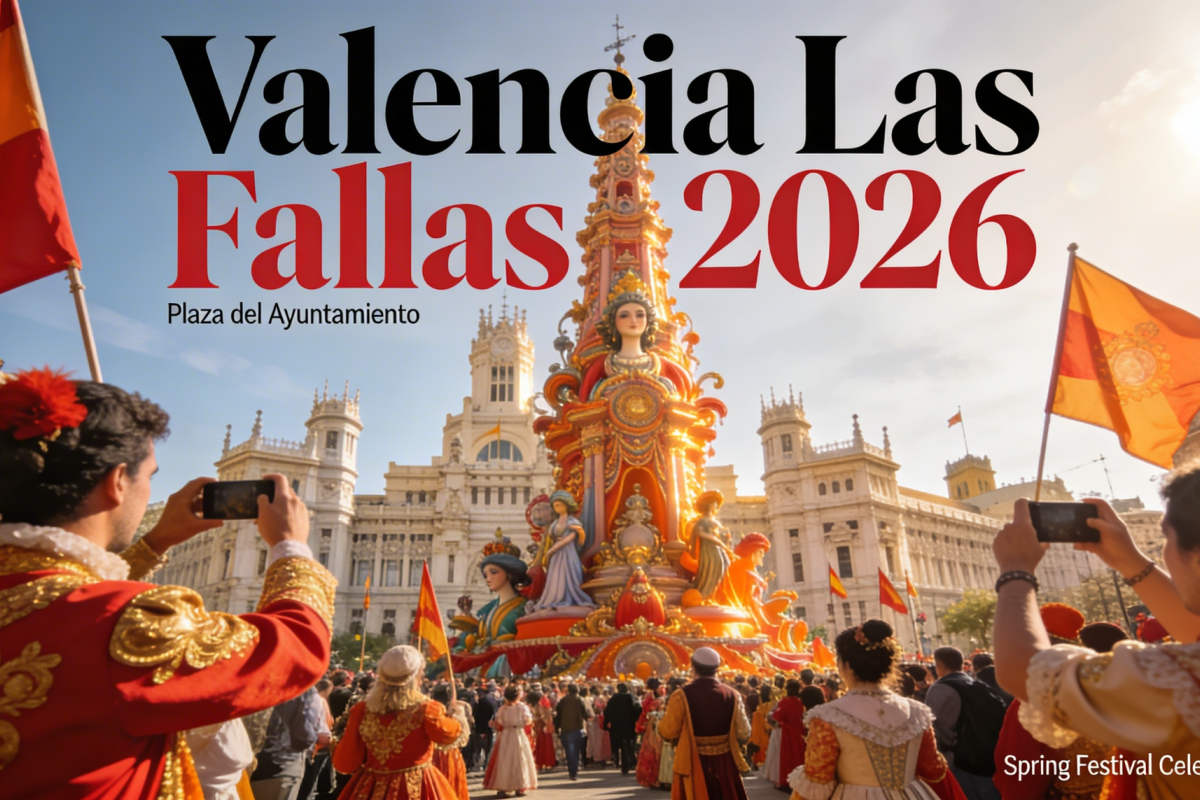
Fallas 2026 in Valencia once again promises to be an impressive celebration of fire, art, tradition and community. Every March, the city of Valencia transforms into a living open-air museum filled with monumental sculptures, thunderous fireworks and centuries-old rituals.
Las Fallas is not just a city festival; it is one of Spain’s most iconic traditions and has been officially recognised as UNESCO Intangible Cultural Heritage since 2016.
The origins of Las Fallas
The origins of Las Fallas date back to the Middle Ages. According to tradition, carpenters burned old wooden structures and leftover materials on 19 March – the feast day of Saint Joseph, their patron saint – to mark the end of winter.
These simple bonfires gradually evolved during the 18th and 19th centuries into creative figures and later into increasingly complex wooden sculptures. Over time, they developed into the monumental artworks we see today.
What began as a craft tradition has grown into a true art form where satire, political commentary and social themes play a central role.
What are the “Fallas”?
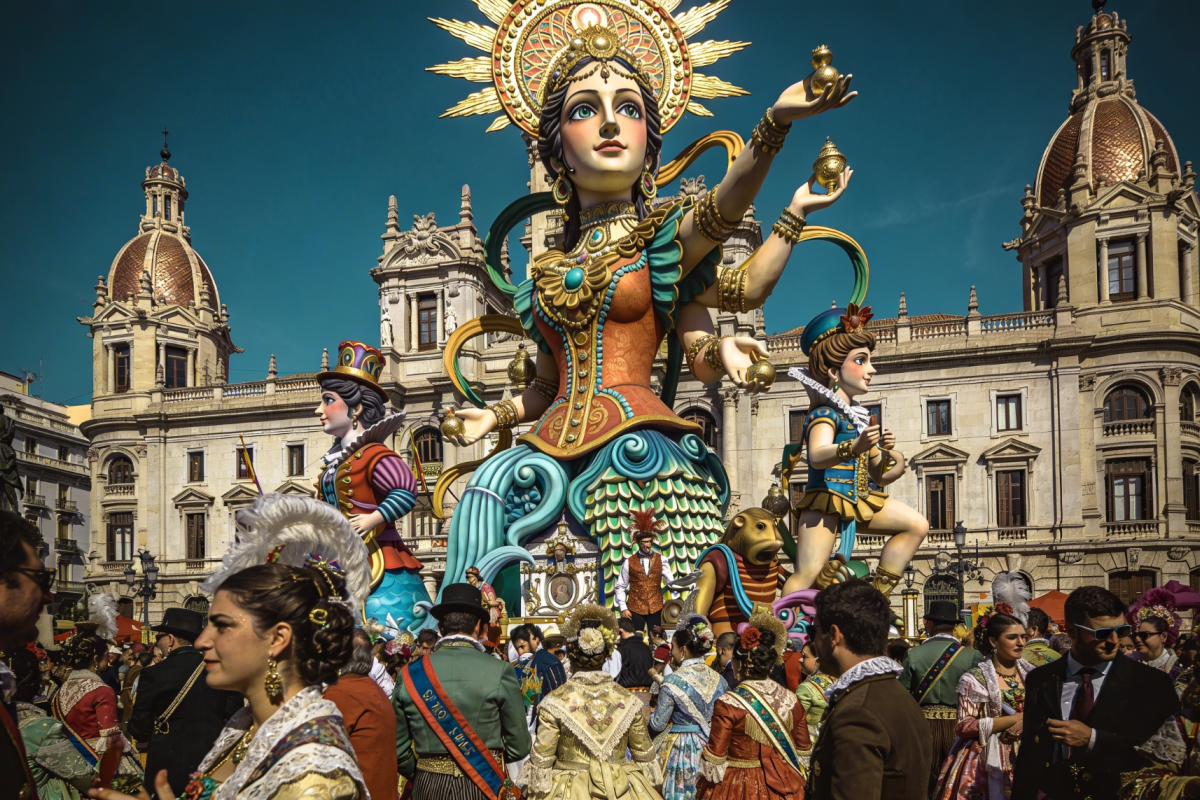
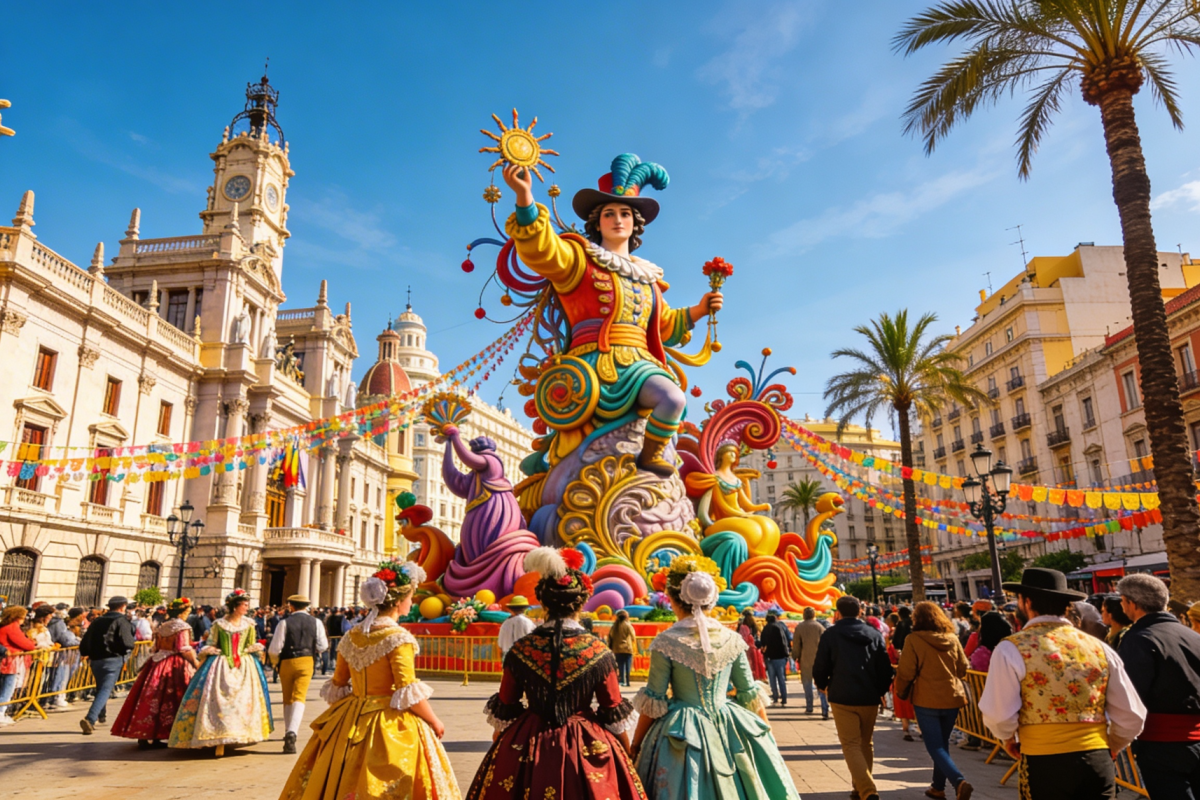
During Fallas 2026, enormous sculptures are erected throughout Valencia, sometimes reaching heights of 20 metres. These monuments, made of wood, polystyrene and paint, consist of multiple scenes that often humorously or critically reflect current events.
Each neighbourhood association works all year round to prepare its own monument.
On 15 March, La Plantà officially takes place: the moment when all fallas are fully assembled and judged by a jury.
One of the most unique aspects of the festival?
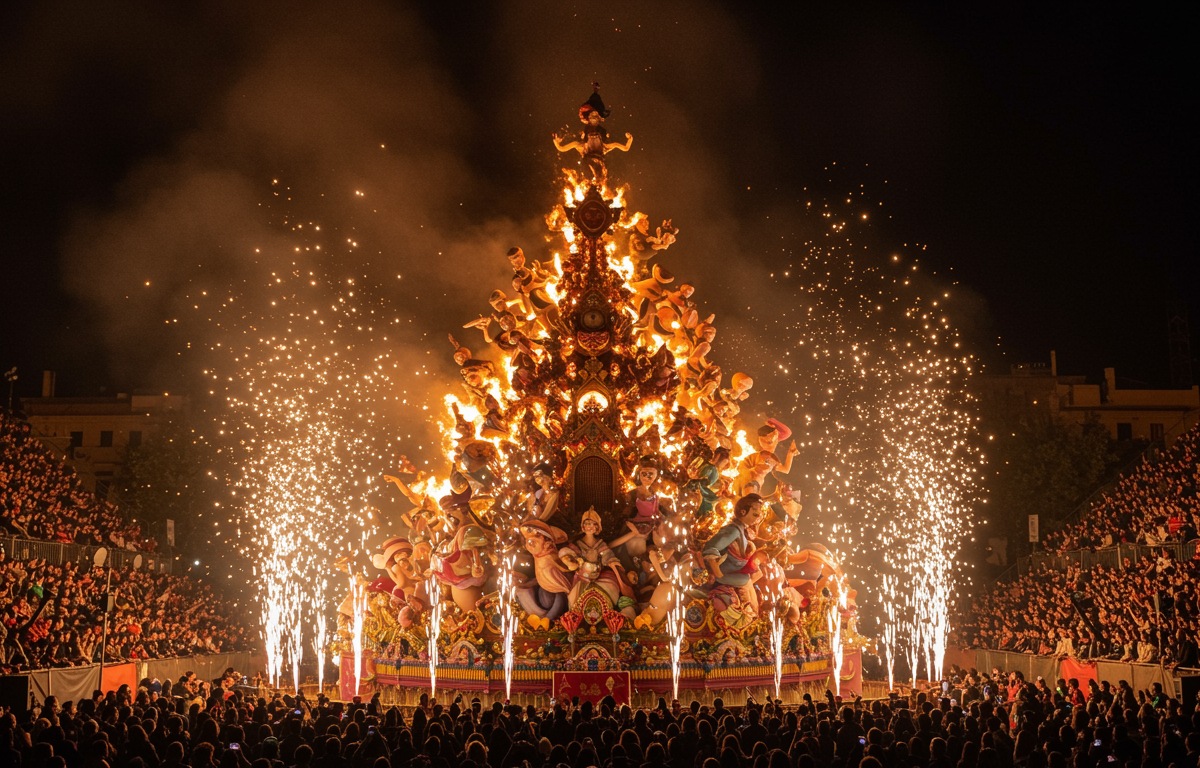
On 19 March, almost all monuments are ceremonially burned during La Cremà. Only one figure – the “ninot indultat” – is saved and preserved in the Fallas Museum.
Mascletà 2026 – The rhythm of Valencia
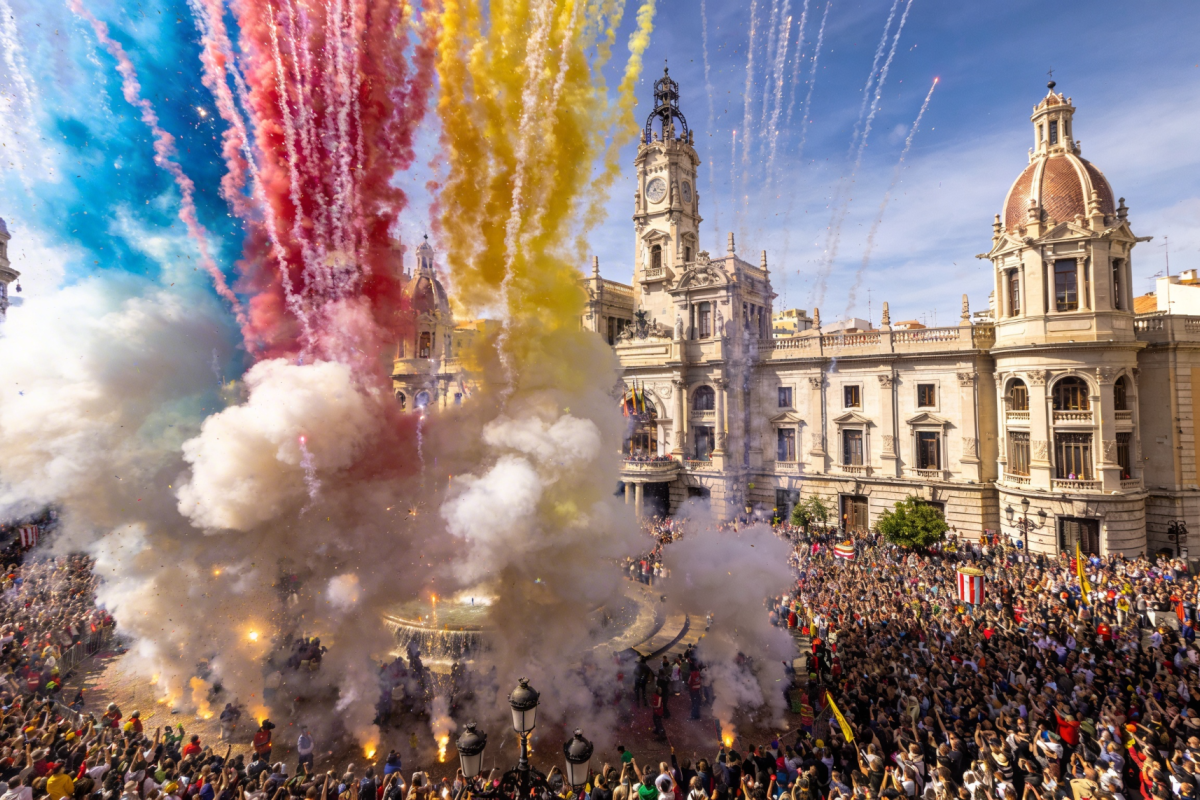
From 1 to 19 March 2026, the famous Mascletà takes place daily at 14:00 in Plaza del Ayuntamiento.
Unlike traditional fireworks, the mascletà is not about colourful effects but about rhythm and power. It is a carefully orchestrated sequence of explosions using thousands of kilos of gunpowder.
The grand finale – known as the “terremoto final” – literally makes the ground shake.
Tradition, costumes and the Flower Offering
Las Fallas is not only about spectacle but is also deeply rooted in Valencian culture.
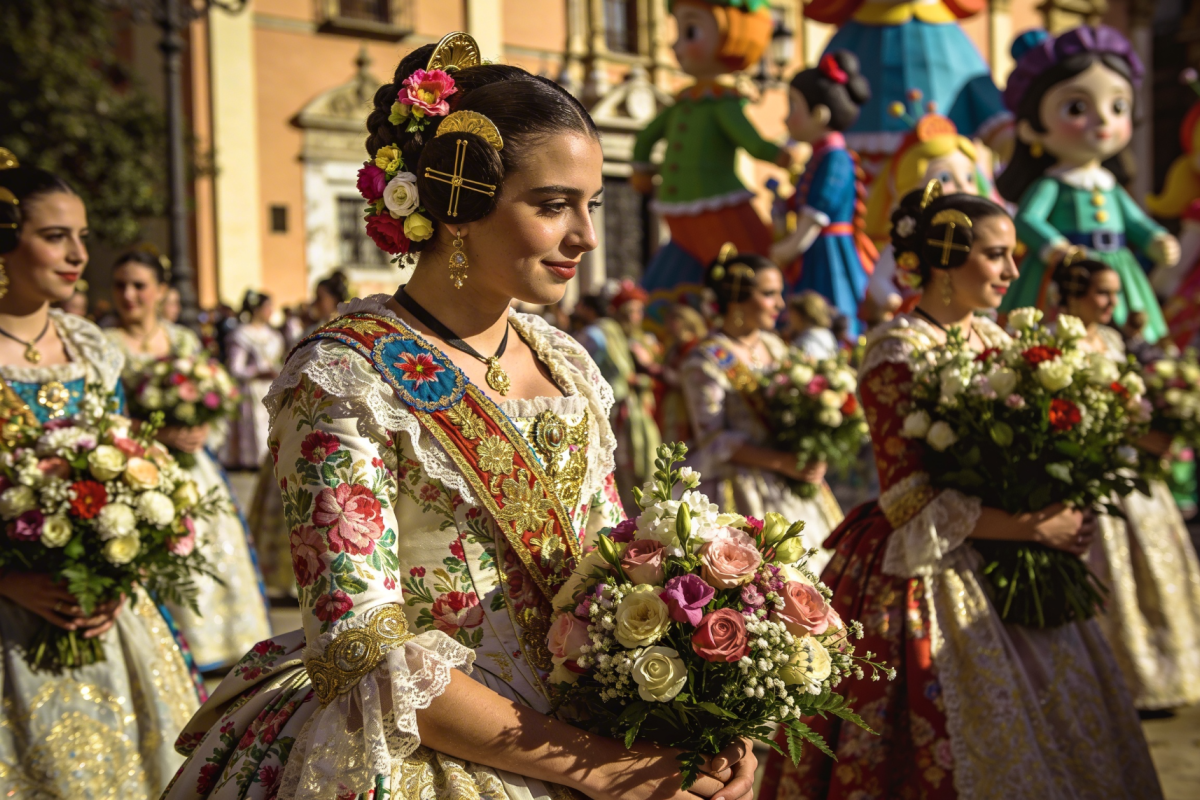
During the Ofrenda de Flores (17 and 18 March 2026), thousands of participants bring flowers to the Virgen de los Desamparados, Valencia’s patron saint. The flowers are used to create a massive floral mosaic in the historic centre.
The traditional costumes – richly embroidered dresses, silk fabrics and distinctive hairstyles – make this one of the most visually impressive parts of the festival.
Fallas 2026 – Key Dates and Programme
For anyone wishing to experience Fallas 2026 in Valencia, these are the main dates:
Late February 2026
• La Crida – official opening of the festival
1 – 19 March 2026
• Daily Mascletà at 14:00 (Plaza del Ayuntamiento)
15 March 2026
• La Plantà – official installation of all fallas
17 – 18 March 2026
• Ofrenda de Flores – flower offering
18 March 2026
• Nit del Foc – spectacular night fireworks display
19 March 2026
🔥 La Cremà – burning of the fallas and grand finale
Why Fallas 2026 remains so unique
What makes Las Fallas truly special is the combination of temporary art and centuries-old tradition. Monuments that have taken months to build disappear in flames within minutes.
It symbolises renewal, letting go of the old and welcoming a new cycle.
Fallas 2026 in Valencia will once again attract visitors from around the world eager to experience this extraordinary mix of art, culture and explosive energy.


 Let’s talk!
 Let’s talk!

