





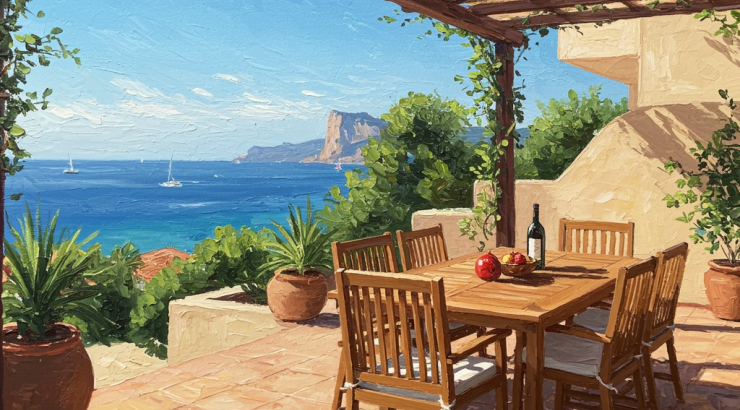
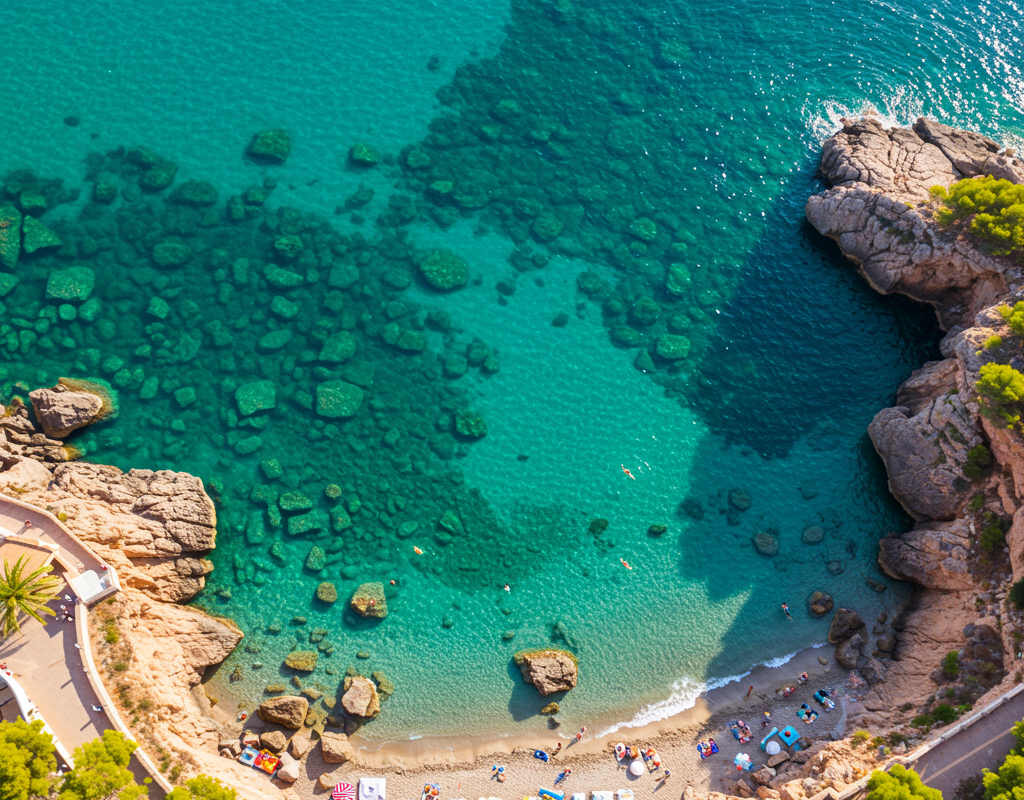
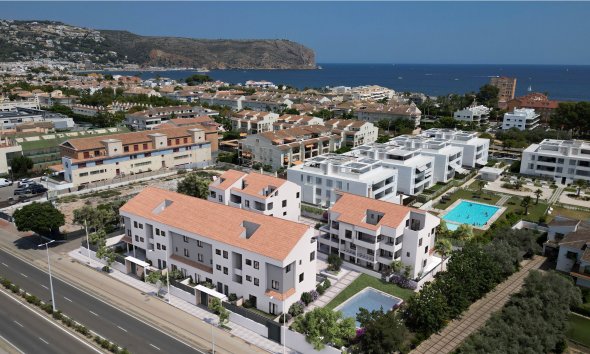
The Northern Costa Blanca is one of the most distinctive coastal regions in Spain. The landscape immediately stands apart from what many people imagine when they think of the Spanish coast: instead of long flat beaches like in the south, you’ll find a Mediterranean coastline shaped by hills, cliffs, sheltered coves and green valleys. This creates a region that feels quieter, greener and more diverse than many other parts of Spain.
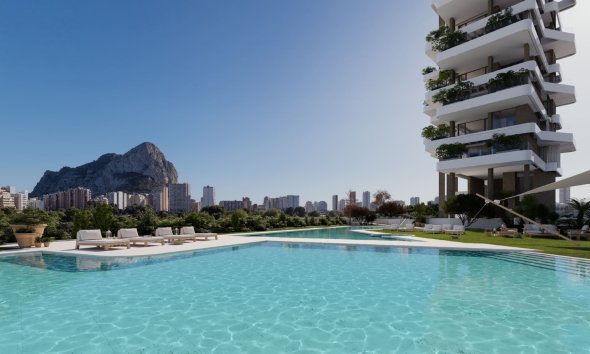
The most well-known towns include Dénia, Jávea (Xàbia), Moraira, Altea and Calpe. Each has its own rhythm and character. Dénia is lively and renowned for its excellent gastronomy, Jávea combines an elegant marina with a charming old town, and Moraira is famous for its peaceful, almost village-like atmosphere. Altea stands out with its whitewashed old town overlooking the bay, while Calpe is instantly recognisable thanks to its iconic Peñón de Ifach rock dominating the coastline.
Because of the hilly terrain, many people here live not directly by the beach but in the elevated residential areas. This comes with advantages: beautiful views, more privacy and a greener microclimate. The coastline consists of smaller beaches, rocky coves and many hiking routes. As a result, the area attracts not only sunseekers but also hikers, cyclists, watersport lovers and nature enthusiasts.
The climate subtly differs from the southern Costa Blanca. In the north, humidity is slightly higher and there is a bit more rainfall, which makes the vegetation greener. Summers are warm but manageable, and winters are mild. Many people experience the climate here as fresher and more balanced, making it ideal for long stays.
The Northern Costa Blanca has an international community. Many Western Europeans — especially British, Dutch, German, French and Scandinavian residents — have settled here. Tourism exists but is far less mass-market than in the major resort areas further south. The atmosphere is calmer, more oriented towards quality of life and local culture rather than pure beach tourism. During winter, life continues: restaurants, shops and marinas remain open, so the region does not “shut down” like other seasonal destinations.
Accessibility is excellent. The A-7 motorway connects all coastal towns, and both Alicante and Valencia have international airports. This makes the region easy to reach for both short visits and extended stays.
The Northern Costa Blanca is therefore a region for people who appreciate nature, gastronomy, peace, culture and a refined Mediterranean lifestyle. Here, the heart of daily life lies not in busy promenades but in scenic walking paths, viewpoints and atmospheric Mediterranean villages.
Would you like to discover which town — such as Dénia, Jávea, Moraira, Altea or Calpe — best matches your preferences?
Feel free to get in touch, and we’ll explore the options together.





 Let’s talk!
 Let’s talk!

